

Guno צְבִי
We fight, We win, Am Yisrael Chai
Benjamin Netanyahu’s decision to walk away from U.S. assistance says a lot about the shifting dynamics.
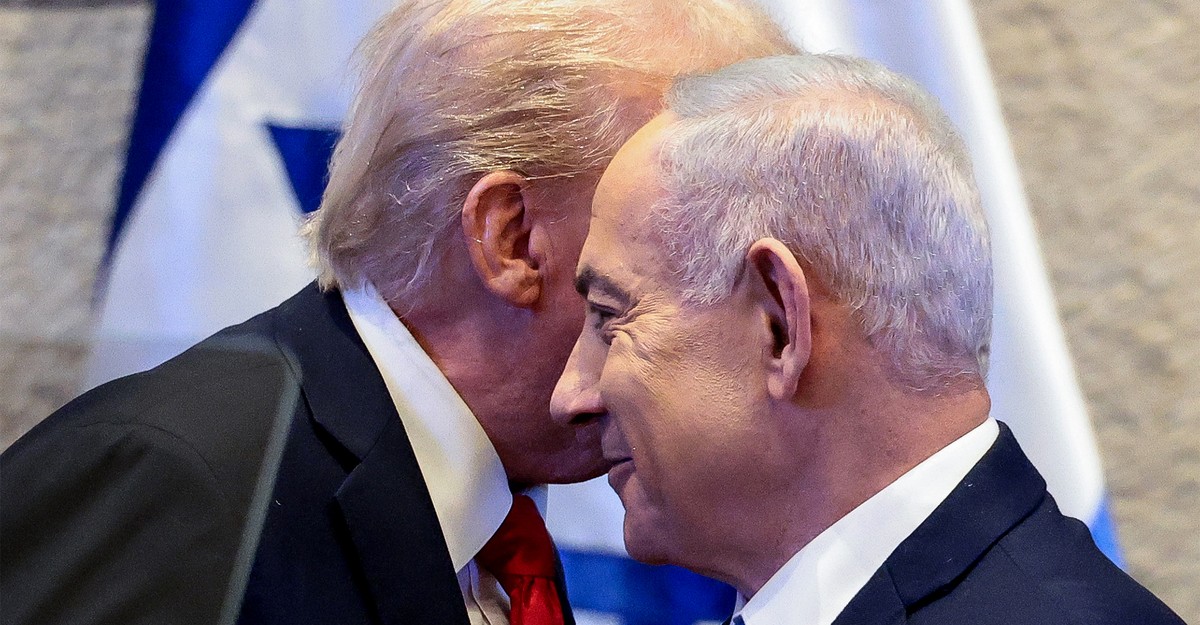
hen israeli prime minister Benjamin Netanyahu arrived at Mar-a-Lago in late December, he had a surprise message for President Trump: Israel would begin weaning itself off U.S. military aid. At first, Trump was taken aback: The billions of dollars that Washington provides Israel each year, after all, have been a bedrock of America’s Middle East strategy for decades, and essential support for its closest regional ally. Trump, ever the wary transactionalist, ribbed the prime minister: Oh, and what do you get out of it?
By the time the leaders next met, in Washington, D.C., on February 11 to discuss Iran, Trump had come around. Eager to shift the military burden onto others and curtail foreign aid, the president brought up Netanyahu’s proposal, according to an Israeli official who shared previously undisclosed details of the recent discussions. By the way, Trump told the prime minister, according to the official, your new approach is a great idea. Secretary of State Marco Rubio had told Netanyahu in a separate meeting the same day that the United States would embrace his approach.
Ending decades of U.S. military assistance to Israel—which has included $3.8 billion a year since 2017, or close to one-fifth of Israel’s annual defense spending—would be a momentous shift that Netanyahu says reflects his country’s emergence as an advanced military power that can reduce its reliance on outside help. In the prime minister’s vision, the aid would be replaced over the next decade by a strategic partnership that, according to the few details he has released, would bring increased joint innovation and reciprocal investment.
 www.theatlantic.com
hen israeli prime minister Benjamin Netanyahu arrived at Mar-a-Lago in late December, he had a surprise message for President Trump: Israel would begin weaning itself off U.S. military aid. At first, Trump was taken aback: The billions of dollars that Washington provides Israel each year, after all, have been a bedrock of America’s Middle East strategy for decades, and essential support for its closest regional ally. Trump, ever the wary transactionalist, ribbed the prime minister: Oh, and what do you get out of it?
By the time the leaders next met, in Washington, D.C., on February 11 to discuss Iran, Trump had come around. Eager to shift the military burden onto others and curtail foreign aid, the president brought up Netanyahu’s proposal, according to an Israeli official who shared previously undisclosed details of the recent discussions. By the way, Trump told the prime minister, according to the official, your new approach is a great idea. Secretary of State Marco Rubio had told Netanyahu in a separate meeting the same day that the United States would embrace his approach.
Ending decades of U.S. military assistance to Israel—which has included $3.8 billion a year since 2017, or close to one-fifth of Israel’s annual defense spending—would be a momentous shift that Netanyahu says reflects his country’s emergence as an advanced military power that can reduce its reliance on outside help. In the prime minister’s vision, the aid would be replaced over the next decade by a strategic partnership that, according to the few details he has released, would bring increased joint innovation and reciprocal investment.
An End to U.S. Military Aid to Israel May Be Closer Than You Think
Benjamin Netanyahu’s decision to walk away from U.S. assistance says a lot about the shifting dynamics.
www.theatlantic.com


